
Bile duct & pancreatic duct
ERCP in Delhi
Treatment of bile duct and pancreatic duct disease through the endoscope
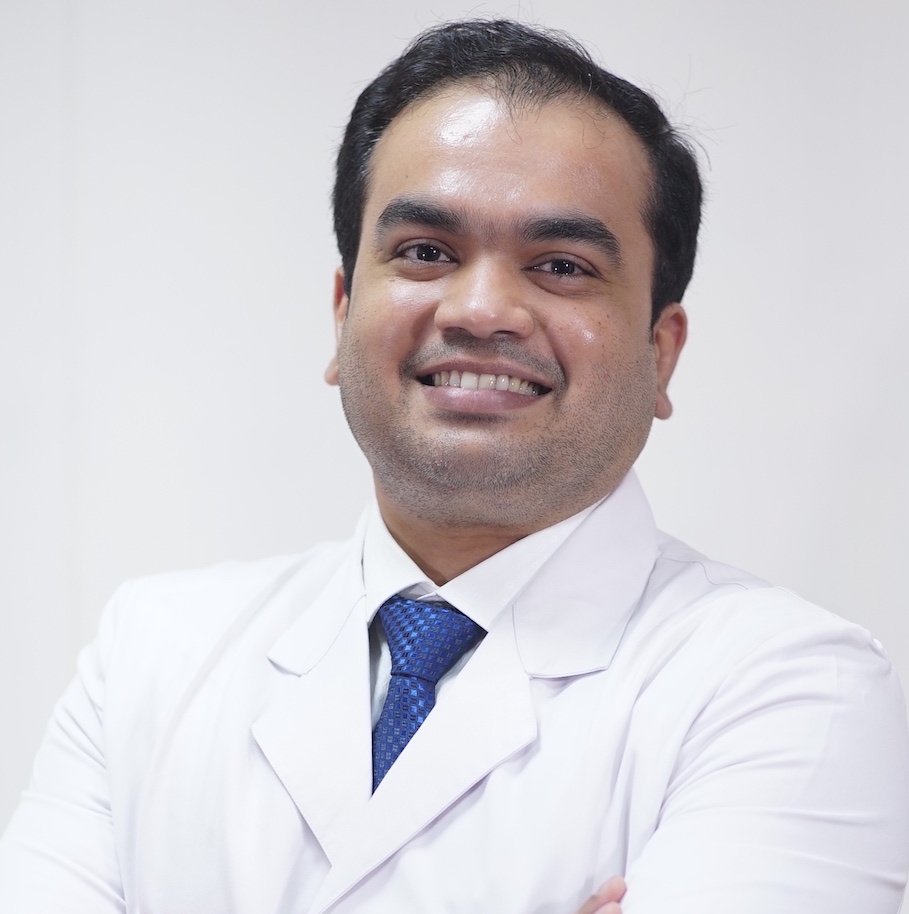
Dr Surakshith T K has performed more than 10,000 ERCP procedures, of which around 2,500 were advanced interventional cases, including ERCP in patients with altered surgical anatomy. ERCP is performed at Fortis Escorts Hospital, Okhla and Holy Family Hospital, New Delhi.
What is ERCP?
ERCP (endoscopic retrograde cholangiopancreatography) is an endoscopic procedure that treats blockage of the bile duct and the pancreatic duct. A side-viewing endoscope is passed through the mouth to the duodenum, the opening of the duct is cannulated, and under X-ray guidance stones are removed, narrowings are dilated or stents are placed. It is a treatment rather than a scan — diagnosis is usually made first on ultrasound, MRCP or EUS.
Indications
What ERCP treats
ERCP is indicated when something is obstructing the bile duct or the pancreatic duct and that obstruction needs to be relieved.
ERCP is the core of advanced pancreaticobiliary endoscopy in this practice. Where ERCP cannot reach the duct, EUS-guided biliary drainage provides an alternative route, and EUS is often used first to establish the cause.
The procedure
How ERCP is performed
- Before the procedure — fasting, blood tests including clotting, and a review of blood-thinning medication
- Sedation — deep sedation or general anaesthesia, with the patient monitored throughout
- Cannulation — the endoscope is passed to the duodenum and the duct is cannulated at the papilla
- Cholangiogram — contrast and X-ray show the anatomy and the level of the blockage
- Treatment — sphincterotomy, stone extraction with a balloon or basket, dilatation, or stent placement
- Recovery — observation for a few hours to overnight, with most patients home within a day
Risks, stated plainly
Post-ERCP pancreatitis is the commonest complication of the procedure. Measures to reduce it — careful cannulation technique, rectal anti-inflammatory medication, and a protective pancreatic stent in selected patients — are routine here.
Bleeding after sphincterotomy, infection and perforation are less common and are usually managed endoscopically.
ERCP is a therapeutic procedure. If the question is only diagnostic, MRCP or EUS answers it without the risks of ERCP, and that is the better first step.
Related
Related procedures
Jaundice, bile duct stones or a blocked bile duct?
Send your ultrasound or MRCP, liver function tests and any previous ERCP notes. Timing matters in biliary obstruction, and infection in a blocked duct needs treating urgently.
- +91 96861 37977
- Kalka Gastro Liver & Obesity Clinic10/22 Nehru Enclave East, Kalkaji, New Delhi 110019
- Mon–Sat, 5:00 pm – 8:30 pmProcedures at Fortis Escorts (Okhla) & Holy Family (NFC)
FAQ
Frequently asked questions
Is ERCP painful?
No. ERCP is performed under deep sedation or general anaesthesia and patients feel nothing during the procedure. Afterwards there may be a sore throat and some bloating for a day. There are no cuts on the abdomen.
How long is the hospital stay after ERCP?
Many patients are observed for a few hours and go home the same day. Those treated for cholangitis, those with more complex duct disease, and those who need monitoring after a difficult cannulation usually stay one night or longer.
Do I still need gallbladder surgery after ERCP?
Usually yes. ERCP clears stones from the bile duct but does not remove the gallbladder, which is where the stones came from. Gallbladder removal is generally advised afterwards to prevent further stones passing into the duct, and the timing is decided with the surgical team.
Does a bile duct stent have to be removed?
Plastic stents are temporary and are changed or removed endoscopically, usually within a few months. Metal stents placed for malignant obstruction are often left in place. Your discharge summary will state which stent was used and when the next procedure is due — that date matters and should not be missed.
- MBBS · MD (Medicine) · DNB (Gastroenterology & Hepatology), Sir Ganga Ram Hospital
- Senior Consultant Gastroenterologist, Hepatologist & Therapeutic Endoscopist
- 250+ third-space procedures · 200+ POEM · 10,000+ ERCP · 5,000+ EUS
- Fortis Escorts Hospital, Okhla · Holy Family Hospital, New Delhi · Kalka Gastro Liver & Obesity Clinic, Kalkaji
- Delhi Medical Council reg. 74686
This page is for general information and does not replace an individual consultation. Whether a procedure is suitable depends on your own reports and examination. Last reviewed September 2026.