
Endoscopic resection
EMR (Endoscopic Mucosal Resection) in Delhi
Endoscopic removal of superficial lesions and large polyps, without surgery
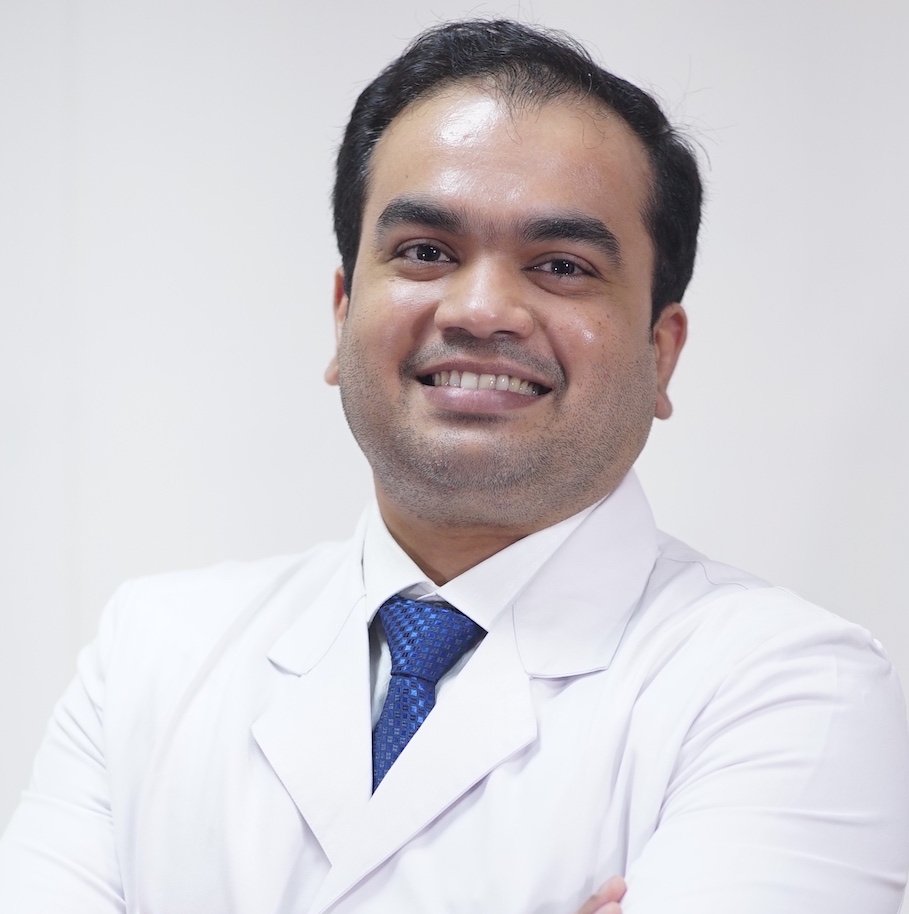
Dr Surakshith T K performs EMR in Delhi for polyps and superficial lesions of the oesophagus, stomach, duodenum and colon — including polyps too large for an ordinary snare. Most are removed at the same sitting as the endoscopy that found them.
What is EMR (endoscopic mucosal resection)?
EMR is an endoscopic technique in which fluid is injected beneath a lesion to lift it away from the wall of the gut, and the lesion is then removed with a wire snare. It is used for superficial lesions and for polyps that are too large, too flat or too awkwardly placed to remove with a standard polypectomy. There is no incision and no scar, and most patients go home the same day.
Indications
What EMR is used for
EMR suits lesions that are clearly confined to the surface layer and lift cleanly when fluid is injected beneath them.
EMR is one form of advanced endoscopic resection offered by Dr Surakshith T K. Where a lesion is large, flat or suspicious for early cancer, ESD is the better technique because it removes the lesion in one piece; where the lesion arises from the muscle layer, EFTR is required.
The procedure
How EMR is performed
- Assessment — the lesion is examined with image-enhanced endoscopy to judge whether it is superficial
- Lifting injection — fluid is injected under the lesion, separating it from the muscle layer
- Snare resection — a wire snare is placed around the lesion and it is cut free with diathermy
- Closure — the base is inspected and closed with clips if needed
- Retrieval — the specimen is retrieved and sent for histopathology
The honest limitation of EMR
A lesion larger than about two centimetres often has to be removed in several pieces. Piecemeal removal works, but the pathologist can no longer judge the edges with certainty, so a check colonoscopy at three to six months is part of the plan rather than an optional extra.
If a lesion does not lift when fluid is injected, that is a warning sign of deeper involvement. The right response is to stop, biopsy and reassess — not to press on.
Where early cancer is suspected, ESD is preferred from the outset because an intact specimen answers the question that matters.
Related
Related procedures
Told a polyp is too large to remove at colonoscopy?
Send the colonoscopy report and images. A good many polyps referred for surgery can be taken out endoscopically by EMR or ESD in a single day-care session.
- +91 96861 37977
- Kalka Gastro Liver & Obesity Clinic10/22 Nehru Enclave East, Kalkaji, New Delhi 110019
- Mon–Sat, 5:00 pm – 8:30 pmProcedures at Fortis Escorts (Okhla) & Holy Family (NFC)
FAQ
Frequently asked questions
Is EMR a day-care procedure?
In most cases yes. EMR is done under sedation, takes between twenty minutes and an hour depending on the size of the lesion, and most patients go home the same day with dietary advice for twenty-four to forty-eight hours. Larger resections are occasionally kept in overnight for observation.
Is EMR painful?
No. EMR is performed under sedation and patients feel nothing during the procedure. Afterwards there may be mild bloating or a sore throat for a few hours. There is no incision anywhere on the body.
When is ESD better than EMR?
ESD is preferred when the lesion is larger than about two centimetres, when it is flat, or when there is any suspicion of early cancer. EMR would remove such a lesion in fragments and leave the margins unreadable, whereas ESD removes it whole so the pathologist can confirm complete removal.
- MBBS · MD (Medicine) · DNB (Gastroenterology & Hepatology), Sir Ganga Ram Hospital
- Senior Consultant Gastroenterologist, Hepatologist & Therapeutic Endoscopist
- 250+ third-space procedures · 200+ POEM · 10,000+ ERCP · 5,000+ EUS
- Fortis Escorts Hospital, Okhla · Holy Family Hospital, New Delhi · Kalka Gastro Liver & Obesity Clinic, Kalkaji
- Delhi Medical Council reg. 74686
This page is for general information and does not replace an individual consultation. Whether a procedure is suitable depends on your own reports and examination. Last reviewed September 2026.