
Third-space endoscopy · Achalasia cardia
POEM Procedure for Achalasia Cardia in Delhi
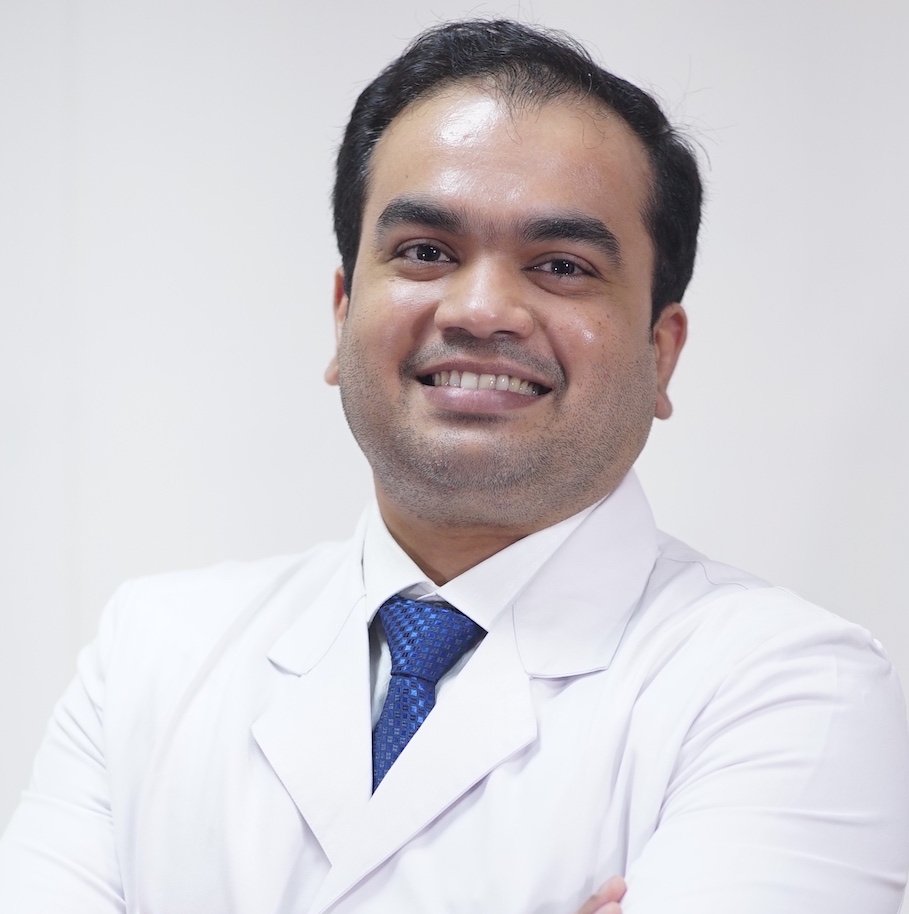
Dr Surakshith T K · Senior Consultant Gastroenterologist & Therapeutic Endoscopist · POEM & Third-Space Endoscopy Specialist
Dr Surakshith T K is a Senior Consultant Gastroenterologist and Therapeutic Endoscopist in Delhi who specialises in POEM and third-space endoscopy for achalasia cardia and other oesophageal motility disorders. He has performed 200+ POEM procedures and more than 250 third-space endoscopic procedures — POEM, ESD and EFTR.
POEM (Peroral Endoscopic Myotomy) is an advanced third-space procedure that relieves difficulty in swallowing by dividing the tight lower oesophageal sphincter from inside the food pipe — no external incision, no scar, and most patients home within 24–48 hours. He performs it at Fortis Escorts Hospital, Okhla and Holy Family Hospital, New Delhi, with consultation and follow-up in Kalkaji, South Delhi.
What is the POEM procedure for achalasia cardia?
POEM (Peroral Endoscopic Myotomy) is a minimally invasive endoscopic procedure that treats achalasia cardia by cutting the tight muscle of the lower oesophageal sphincter through a tunnel made inside the wall of the food pipe. The endoscope is passed through the mouth, so there are no cuts on the abdomen and no scars. It takes about 60–90 minutes under general anaesthesia, and published long-term data show clinical success in roughly 87% of patients at a median follow-up of six years.

POEM & third-space endoscopy specialist
Dr Surakshith T K — POEM and third-space endoscopy specialist in Delhi
POEM is a technically demanding procedure, and outcomes depend on two things above all: how many third-space cases the endoscopist has done, and whether the myotomy is tailored to the manometry findings rather than performed to a fixed recipe.
Dr Surakshith T K is a Senior Consultant Gastroenterologist, Hepatologist and Therapeutic Endoscopist with over 15 years of clinical experience. His practice is centred on third-space endoscopy — 200+ POEM procedures for achalasia and other motility disorders, and more than 250 third-space procedures in total including ESD and EFTR. He is among a small group of endoscopists in India performing the full range of third-space work, and he also runs a high-resolution manometry and pH service, so diagnosis and treatment of oesophageal motility disorders sit under one roof.
- Every POEM is preceded by high-resolution manometry, upper GI endoscopy and a timed barium swallow
- Myotomy length and orientation (anterior or posterior) tailored to the achalasia subtype and prior treatment
- POEM performed at tertiary hospitals with 24-hour anaesthesia, ICU and surgical backup
- Structured follow-up with Eckardt scoring and surveillance endoscopy for reflux
- Straight counselling on when balloon dilation or Heller myotomy is the better choice
Advanced third-space endoscopy training in Japan
Dr Surakshith has trained in Endoscopic Submucosal Dissection (ESD) and image-enhanced endoscopy (IEE) at Jichi Medical University, Japan, under Dr Hironori Yamamoto (April 2024), and at the Osaka International Cancer Institute, under Professor Noriya Uedo (February 2026).
Third-space endoscopy
What is third-space endoscopy — and why it matters for POEM
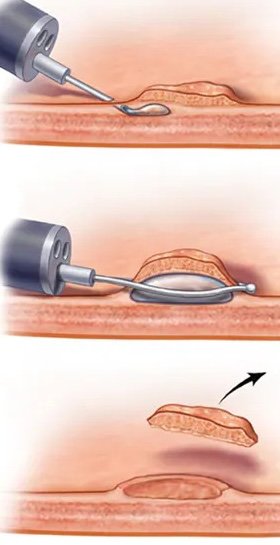
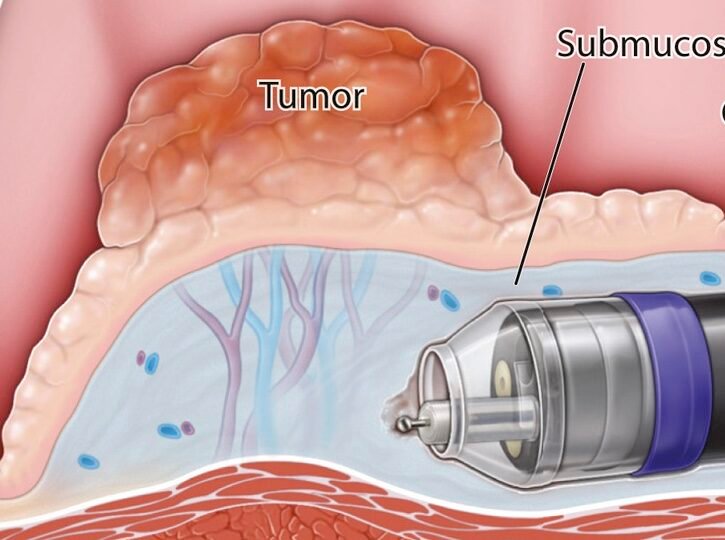
Third-space endoscopy is an advanced endoscopic technique that works inside the wall of the gastrointestinal tract — in the submucosal space between the lining and the muscle — so that muscle can be cut or deep tumours removed without any external surgical incision. POEM was the first third-space procedure; ESD and EFTR use the same skills.
POEM
Peroral Endoscopic Myotomy for achalasia cardia and spastic oesophageal disorders — jackhammer oesophagus, diffuse oesophageal spasm, EGJ outflow obstruction. 200+ performed.
ESD
Endoscopic Submucosal Dissection — en-bloc removal of early cancers and large flat lesions of the oesophagus, stomach and colon without surgery.
EFTR
Endoscopic Full-Thickness Resection — removal of tumours arising from the deeper muscle layer (for example GISTs) with endoscopic closure of the wall.
G-POEM & other applications
Gastric POEM for selected patients with refractory gastroparesis, and submucosal tunnelling for subepithelial tumours (STER). Same tunnel technique, different target.
In Dr Surakshith’s words
How I assess a patient before recommending POEM
POEM is not the right answer for everyone with difficulty swallowing. This is how a case is worked up in this practice.
What I look at first
Before I offer POEM I want three things in front of me: a high-resolution manometry study, an upper GI endoscopy I trust, and a timed barium swallow. Manometry tells me whether this is achalasia at all and which subtype it is. Endoscopy rules out a cancer at the junction masquerading as achalasia, which must never be tunnelled through. The barium study gives me the width and shape of the oesophagus and a baseline for how it empties.
I also want to know what has been tried already — balloon dilation, Botox, a previous Heller myotomy — because that changes where and how I operate.
How I decide the length and side of the myotomy
The manometry subtype drives the myotomy. For type I and type II achalasia the problem is the sphincter, so the myotomy is kept relatively short on the oesophageal side and extended two to three centimetres onto the stomach. For type III, the spastic segment above the sphincter is the problem, so I map its length on manometry and extend the myotomy to cover it — something only POEM can do.
If a patient has had a Heller myotomy, the front wall is scarred, so I go in through the back wall. Otherwise the anterior approach is my default.
When I advise against POEM
I will steer a patient away from POEM if endoscopy or biopsy raises any suspicion of cancer, if there is a large hiatus hernia or significant existing reflux — where a Heller myotomy with an anti-reflux wrap serves them better — or if they are not fit for general anaesthesia.
And in a very dilated, end-stage oesophagus I am honest that POEM may improve emptying but will not give a normal swallow. Patients deserve that conversation before the procedure, not after.
The condition
What is achalasia cardia?
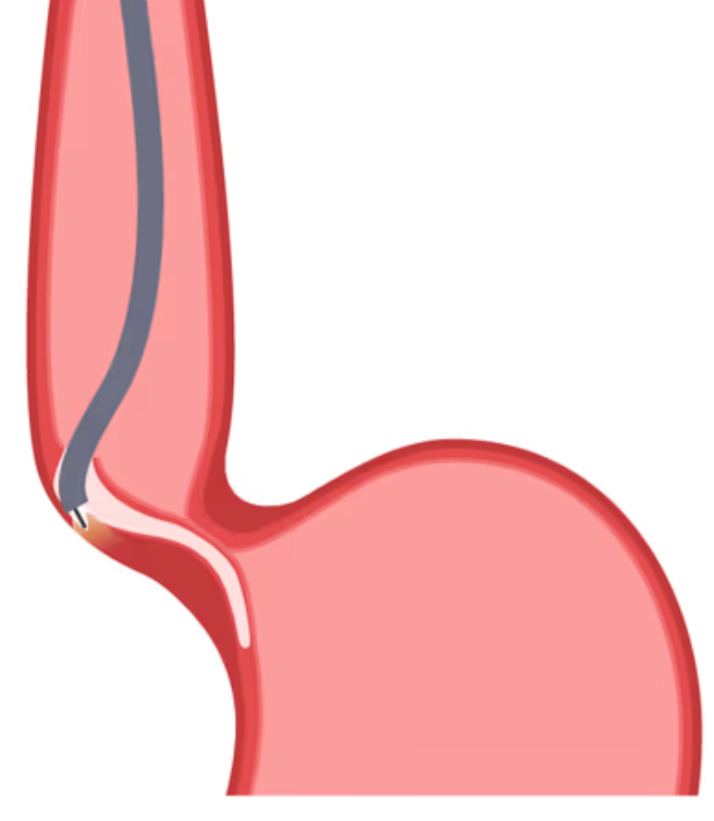
Achalasia cardia is a disorder of the food pipe in which two things go wrong at the same time: the valve at the bottom of the oesophagus (the lower oesophageal sphincter, or LES) fails to relax and open, and the muscle of the oesophagus loses its ability to push food down.
It happens because the nerve cells in the wall of the oesophagus that normally tell the valve to relax are progressively lost. Food and liquid then collect above a closed valve instead of passing into the stomach.
Achalasia is uncommon — roughly 1 to 2 new cases per 100,000 people each year — and it is frequently mistaken for acid reflux or “gas trouble” for several years before the correct diagnosis is made. It is not cancer, and it is not caused by anything you ate.
High-resolution oesophageal manometry divides achalasia into three types, and the type matters because it changes which treatment works best:
- Type I — no pressure activity in the oesophageal body
- Type II — pressurisation along the whole oesophagus (best treatment response)
- Type III — spastic contractions; POEM is generally the preferred treatment
Symptoms
Symptoms of achalasia cardia
If food feels like it stops in your chest — and liquids are just as difficult as solids — that pattern points towards achalasia rather than ordinary acidity.
Swallowing
- Difficulty swallowing solids and liquids
- Food sticking in the chest
- Needing water to push food down
- Eating very slowly
Regurgitation
- Undigested food coming back up
- Bringing up food hours after a meal
- Night-time coughing or choking
- Sleeping propped up on pillows
Chest & reflux-like
- Chest pain or pressure behind the breastbone
- Burning that antacids do not relieve
- Belching difficulty, bloating
- Often misdiagnosed as GERD
Warning signs
- Unintentional weight loss
- Repeated chest infections from aspiration
- Avoiding eating out or with others
- Symptoms worsening over months to years
Diagnosis
How achalasia cardia is diagnosed before POEM
POEM should never be planned on symptoms alone. Three tests confirm the diagnosis, rule out look-alike conditions, and decide how long the myotomy needs to be.
1. Upper GI endoscopy
A camera test of the food pipe and stomach. It rules out cancer at the junction (pseudoachalasia), a tight stricture, or eosinophilic oesophagitis — all of which can mimic achalasia and must not be treated with POEM.
2. High-resolution manometry
The gold-standard test. A thin pressure catheter measures how the oesophagus contracts and whether the valve relaxes. It confirms achalasia and gives the type (I, II or III) that guides the length of the myotomy.
3. Timed barium swallow
An X-ray taken after swallowing barium shows the classic tapered “bird-beak” narrowing, how wide the oesophagus has become, and how quickly it empties — a useful baseline to compare against after POEM.
The procedure
How the POEM procedure is performed
POEM belongs to a group of techniques called third-space endoscopy — working inside the wall of the gut, between its layers, rather than cutting from outside.
Anaesthesia & scope
You are given general anaesthesia. A flexible endoscope is passed through the mouth into the oesophagus. Nothing is inserted through the skin, and you feel nothing during the procedure.
Mucosal entry
A small opening about 2 cm long is made in the inner lining of the oesophagus, roughly 10–12 cm above the tight valve. This is the doorway into the wall.
Submucosal tunnel
A tunnel is created inside the oesophageal wall, between the lining and the muscle, and carried downwards past the valve into the top of the stomach.
Myotomy
The tight circular muscle of the lower oesophageal sphincter is divided under direct vision, extending 2–3 cm onto the stomach side. The length is tailored to the achalasia type.
Closure
The entry point is closed with endoscopic clips or sutures. The muscle that was cut stays open; the lining heals over the tunnel within days.
Recovery
You wake up in recovery with no wounds. A contrast X-ray the next morning confirms free flow into the stomach before liquids are started.
Treatment options
POEM vs Heller myotomy vs balloon dilation vs Botox
All four treatments aim to open the tight valve. They differ in how long the benefit lasts, how invasive they are, and how much reflux they cause afterwards.
| POEM | Laparoscopic Heller myotomy | Pneumatic balloon dilation | Botox injection | |
|---|---|---|---|---|
| How it is done | Through the mouth, endoscopically | Keyhole surgery through the abdomen | Balloon inflated across the valve at endoscopy | Injection into the valve at endoscopy |
| External cuts | None | 4–5 small abdominal ports | None | None |
| Anaesthesia | General | General | Sedation or general | Sedation |
| Typical hospital stay | 1–2 days | 2–3 days | Day care to 1 day | Day care |
| Durability | Long-term; ~87% still successful at median 6 years | Long-term; comparable at 2 years | Often needs repeat dilations | Wears off in 6–12 months |
| Best suited to | Type III (spastic) achalasia, sigmoid oesophagus, previously failed treatment, young patients wanting a durable result | Patients who also need a hiatus hernia repaired, or where POEM expertise is unavailable | Older patients, or those who prefer to avoid myotomy | Frail or elderly patients unfit for definitive treatment |
| Main drawback | Acid reflux afterwards in about a quarter of patients — usually mild and PPI-controlled | Surgical incisions; anti-reflux wrap added to reduce reflux | Small risk of perforation; benefit may not last | Temporary; repeated injections can make later myotomy harder |
Which option suits you depends on your manometry type, the width and shape of your oesophagus, your age, your fitness for anaesthesia and what treatment you have already had. Dr Surakshith reviews all of these before recommending a procedure.
Am I a candidate?
Who is suitable for POEM?
POEM is usually a good option if
- Manometry has confirmed achalasia — type I, II or III
- You have type III (spastic) achalasia, where a longer myotomy is needed
- Balloon dilation, Botox or a previous Heller myotomy has failed
- Your oesophagus has become dilated or sigmoid-shaped
- You have a related spastic disorder — jackhammer oesophagus, diffuse oesophageal spasm or EGJ outflow obstruction
- You want a durable, scarless treatment and are fit for general anaesthesia
We will discuss carefully first if
- You already have significant acid reflux or a large hiatus hernia
- Endoscopy or biopsy raises the possibility of cancer at the junction
- You have severe lung or heart disease making anaesthesia risky
- You are on blood thinners or have a bleeding disorder
- Previous radiation or surgery has scarred the oesophageal wall
- You are pregnant, or unable to stop antiplatelet medication safely
Dr Surakshith T K on when POEM is the right treatment for achalasia — published by Fortis Healthcare.
Recovery
Recovery after POEM — what to expect
Because nothing is cut on the outside, recovery after POEM is driven by how quickly the inner lining heals rather than by wound pain. Most patients are surprised by how ordinary the first week feels.
- Day of procedure60–90 minutes under anaesthesia. You stay nil by mouth overnight and receive intravenous fluids and antibiotics. Mild chest discomfort and a sore throat are common.
- Day 1A contrast X-ray checks that the closure is sealed and contrast flows freely into the stomach. Clear liquids are started. Many patients notice they can swallow water easily for the first time in years.
- Day 1–2Discharge home on a liquid diet with a proton pump inhibitor (acid-suppressing tablet).
- Week 1Full liquids moving to a soft diet — dal, khichdi, curd, soups, eggs, soft fruit. No bread, rice, meat or raw vegetables yet. Desk work is usually possible after 4–7 days.
- Weeks 2–4Gradual return to a normal diet, chewing well and eating slowly. Avoid heavy lifting and strenuous gym work for about two weeks.
- 3 months & beyondReview with an Eckardt symptom score. An endoscopy at 6–12 months checks for silent acid reflux, since some reflux after POEM causes no symptoms.
Risks and side effects — stated honestly
POEM is a safe procedure in experienced hands, but no procedure is risk-free. What to know:
- Acid reflux is the commonest issue — troublesome reflux symptoms in about 27% and visible reflux oesophagitis in about 24%, most of it mild and controlled with a daily PPI tablet.
- Air tracking into the abdomen or under the skin during the procedure is common, usually harmless and settles by itself.
- Mucosal tear or bleeding can occur and is almost always managed endoscopically in the same sitting.
- Serious complications such as leak or infection needing surgery are uncommon.
- POEM does not restore the lost nerves. It removes the obstruction, so lifelong follow-up is advised — including endoscopic surveillance for reflux damage.
Results
How well does POEM work for achalasia?
Success is measured with the Eckardt score, which adds up dysphagia, regurgitation, chest pain and weight loss out of 12. A score of 3 or less after treatment counts as clinical success.
Source: Long-term outcomes of peroral endoscopic myotomy for achalasia: a systematic review and meta-analysis with median follow-up ≥ 5 years, Surgical Endoscopy, 2026 — 16 studies, 2,421 patients. Individual results vary with achalasia type, how long symptoms have been present and the shape of the oesophagus.
Where Dr Surakshith performs POEM in Delhi
POEM at Fortis Escorts Hospital, Okhla and Holy Family Hospital
POEM is performed under general anaesthesia at these tertiary hospitals, with 24-hour anaesthesia, ICU and surgical backup. Consultation, manometry review and follow-up happen at the Kalkaji clinic.

Fortis Escorts Hospital
Holy Family Hospital
Dr Surakshith T K on POEM for achalasia — published by Fortis Healthcare.
Kalka Gastro Liver & Obesity Clinic
Consultation, review of outside reports, and post-POEM follow-up including endoscopy with advanced zoom endoscopes and Image Enhanced Endoscopy (IEE).
- Upper GI endoscopy
- Manometry & pH study
- GERD and swallowing disorders
- Expert second opinion on achalasia treatment
Cost & insurance
POEM procedure cost in Delhi
There is no single fixed price for POEM. The final estimate depends on the hospital, the room category you choose and how long you stay.
What the cost includes
- Hospital admission and room charges (room category is the single biggest variable)
- Operation theatre, general anaesthesia and anaesthetist
- Single-use endoscopic accessories — knife, injection needle, clips or suturing device
- Pre-procedure workup, post-procedure contrast study, medicines and follow-up
Pre-POEM manometry and endoscopy, if not already done, are billed separately.
Insurance, CGHS and cashless
POEM is a therapeutic procedure for a confirmed medical diagnosis, not a cosmetic one. Most health insurance policies, CGHS and corporate TPA panels cover it, subject to your policy terms, waiting periods and room-rent limits.
The hospital’s TPA desk raises the pre-authorisation using your manometry and endoscopy reports. Approval usually comes through before admission, so most patients are treated cashless.
Patient experience
What patients say about POEM
Best doctor for POEM procedure. Dr Surakshith explained everything about achalasia cardia and the benefits of the POEM procedure. My procedure went very well and I was discharged the next day. Thanks to his team.
Dr Surakshith explains complex conditions clearly and provides the right treatment guidance. Highly recommended for digestive and liver diseases.
FAQ
POEM for achalasia — frequently asked questions
What is the POEM procedure for achalasia cardia?
POEM (Peroral Endoscopic Myotomy) is a minimally invasive endoscopic treatment for achalasia cardia. An endoscope is passed through the mouth, a tunnel is created inside the wall of the food pipe, and the tight muscle of the lower oesophageal sphincter is cut from within. There are no external cuts and no scars, and the procedure takes about 60–90 minutes under general anaesthesia.
Is POEM better than Heller myotomy surgery?
Both open the tight valve and both give good results. POEM avoids abdominal incisions, usually means a shorter stay, and allows a longer myotomy — which is why it is generally preferred for type III (spastic) achalasia, for a sigmoid-shaped oesophagus, and after failed previous treatment. Heller myotomy adds an anti-reflux wrap, so reflux afterwards is somewhat less common, and it is the better choice if a large hiatus hernia also needs repair. The right answer depends on your manometry findings and anatomy.
How successful is POEM, and how long does it last?
In a pooled analysis of 16 studies and 2,421 patients followed for a median of six years, POEM was still clinically successful in about 87%, with average Eckardt symptom scores falling from 6.7 before the procedure to 1.8 after. Results are best in type II achalasia and in patients treated before the oesophagus becomes very dilated.
Is POEM painful? Will I have any scars?
You are fully asleep under general anaesthesia and feel nothing during the procedure. Because everything is done through the mouth, there are no incisions and no scars anywhere on the body. Afterwards most patients have only mild chest discomfort and a sore throat for a day or two, controlled with simple painkillers.
How long is the hospital stay after POEM and when can I go back to work?
Most patients stay one to two nights. A contrast X-ray on the morning after the procedure confirms the closure is sealed before liquids are started. Desk work is usually possible within four to seven days; heavy lifting and gym work are avoided for about two weeks.
What can I eat after the POEM procedure?
Clear liquids from day one, full liquids for the first few days, then a soft diet for the rest of the first week — dal, khichdi, curd, soups, eggs, soft fruit. A normal diet is resumed gradually over two to four weeks, eating slowly and chewing well. Your team will give you a written diet chart at discharge.
What are the risks and side effects of POEM?
The commonest issue is acid reflux afterwards — troublesome symptoms in roughly 27% of patients and visible reflux oesophagitis in about 24%, most of it mild and controlled with a daily acid-suppressing tablet. Air tracking under the skin or into the abdomen during the procedure is common and usually settles by itself. Bleeding or a tear in the lining is normally treated endoscopically in the same sitting. Serious complications needing surgery are uncommon.
Can achalasia come back after POEM?
POEM relieves the obstruction but does not restore the nerve cells that were lost, so achalasia is controlled rather than cured. A minority of patients develop recurrent swallowing difficulty over the years. This can usually be managed with balloon dilation or, in selected cases, a repeat myotomy. Regular follow-up with symptom scoring picks it up early.
Can POEM be done if I have already had balloon dilation, Botox or Heller myotomy?
Yes. Previous treatment is not a barrier — POEM is in fact one of the strongest options after failed dilation, repeated Botox or a previous Heller myotomy, because a fresh myotomy can be made on the opposite wall away from earlier scarring. Bring all previous reports and procedure notes to your consultation.
How much does the POEM procedure cost in Delhi?
There is no single fixed price. The estimate depends on the hospital, the room category chosen, the length of stay and the endoscopic accessories used. POEM is a therapeutic procedure for a confirmed diagnosis, so most insurance policies, CGHS and corporate TPA panels cover it subject to policy terms — the hospital’s TPA desk raises pre-authorisation from your manometry and endoscopy reports. Call or WhatsApp +91 96861 37977 for a written estimate for your case.
Which doctor performs POEM for achalasia in Delhi?
Dr Surakshith T K performs POEM at Fortis Escorts Hospital (Okhla) and Holy Family Hospital (New Friends Colony), with consultation and follow-up at Kalka Gastro Liver & Obesity Clinic in Kalkaji, South Delhi. He is a Senior Consultant Gastroenterologist and Therapeutic Endoscopist (MBBS, MD, DNB Gastroenterology) with 15+ years of experience, 200+ POEM procedures and 250+ third-space endoscopic procedures including POEM, ESD and EFTR.
Is POEM used for anything other than achalasia?
Yes. The same third-space technique treats other spastic disorders of the oesophagus — diffuse oesophageal spasm, jackhammer oesophagus and oesophagogastric junction outflow obstruction — and a related procedure, G-POEM, is used for selected patients with gastroparesis.
- MBBS · MD (Medicine) · DNB (Gastroenterology & Hepatology), Sir Ganga Ram Hospital
- Senior Consultant Gastroenterologist, Hepatologist & Therapeutic Endoscopist
- 15+ years’ experience · 200+ POEM procedures · 250+ third-space endoscopic procedures
- Fortis Escorts Hospital, Okhla · Holy Family Hospital, New Delhi · Kalka Gastro Liver & Obesity Clinic, Kalkaji
- Advanced ESD & IEE training — Jichi Medical University (Dr Hironori Yamamoto, April 2024) · Osaka International Cancer Institute (Prof Noriya Uedo, February 2026)
- Member — ACG · WEO · INASL · SGEI
Clinical figures on this page are cited to the primary literature. This page is for general information and does not replace an individual consultation. Last reviewed September 2026.
Related
Related procedures & conditions
Manometry & pH Study
The gold-standard test that confirms achalasia and gives the type that guides POEM.
Upper GI Endoscopy
Camera test of the food pipe and stomach — essential before POEM to rule out look-alike conditions.
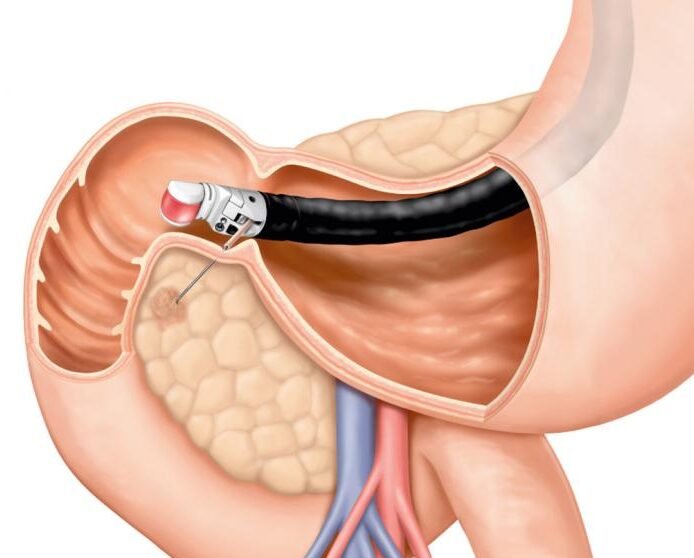
Advanced & Third-Space Endoscopy
POEM, ESD, EMR and EFTR — scarless treatment of conditions that once needed open surgery.
Struggling to swallow? Get the right diagnosis first.
Bring your endoscopy, manometry or barium swallow reports — or send them ahead — for a clear opinion on whether POEM, balloon dilation or surgery is right for you.
- +91 96861 37977
- Kalka Gastro Liver & Obesity Clinic10/22 Nehru Enclave East, Kalkaji, New Delhi 110019
- Mon–Sat, 5:00 pm – 8:30 pmPOEM performed at Fortis Escorts (Okhla) & Holy Family (NFC)